Small businesses want automation, but not at the cost of customer trust
German SMEs often struggle to provide consistent customer support with limited resources. Support requests are scattered across emails, phone calls, and CRMs, handled by small teams without clear processes or automation.
This case study explores how I used UX research and concept design to shape an AI-powered support assistant that reduces repetitive work while keeping humans in control.
Context
Tegra is a concept for an AI-driven customer support assistant designed for small and mid-sized companies in Germany.
The goal was to:
reduce repetitive support work
shorten response times
improve consistency and transparency
remain trustworthy and easy to adopt without technical expertise
The concept was developed as a course project, grounded in research with founders and customer support team leads.
Situation & constraints
Duration: 4 weeks
Scope: UX research, concept validation, product strategy, UI design
Tools: Figma, Miro
Constraints included limited time, no access to production data, and the need to design a solution suitable for non-technical teams.
The challenge
Customer support in SMEs is often:
fragmented across tools
handled reactively
dependent on individual employees
difficult to scale
At the same time, founders are cautious about AI:
“We want automation, but we don’t want to lose control or sound robotic.”
The core challenge became:
How might we reduce support overload through AI, while preserving trust, clarity, and human control?
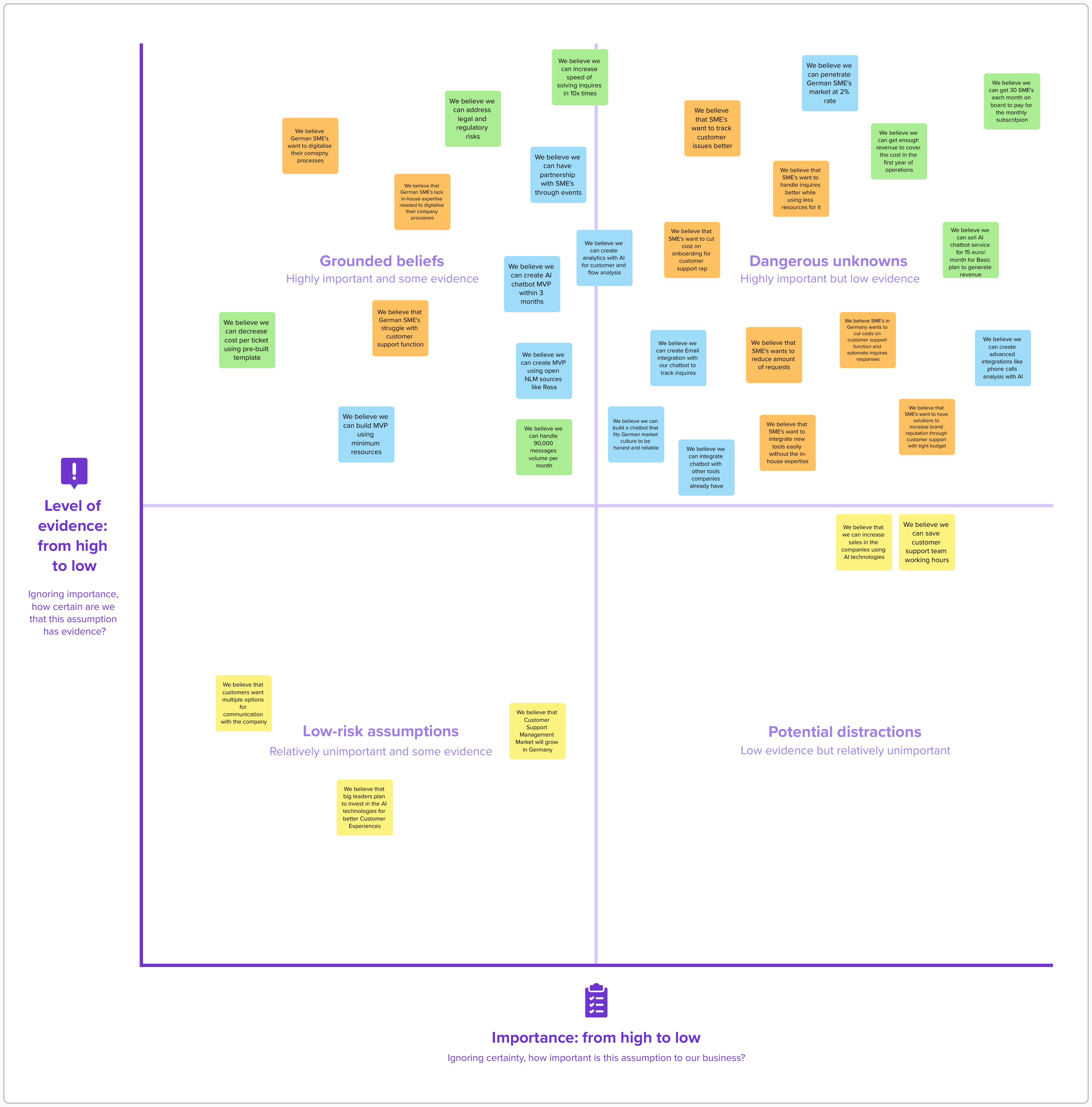
Research & insights
Research methods
1:1 interviews and surveys with founders
Interviews with customer support team leads
Key insights
Information loss is systemic
Conversations live across email, phone, and CRM with no unified history.No standardized support process
Support is often handled by sales or ops without templates or workflows.Repetition overload
Agents repeatedly answer the same questions, reducing capacity for complex issues.Lack of visibility and metrics
Most teams track success only through Google reviews.Tool fragmentation
Multiple unintegrated systems create friction and slow responses.
These insights revealed that the problem wasn’t just speed, it was cognitive load and lack of structure.
Strategy: balancing AI and human control
Based on research, I defined three core principles for the concept:
AI should assist, not replace
Automation handles repetition; humans handle exceptions.Transparency builds trust
Users should always know when AI is responding, and how to intervene.Adoption must be frictionless
SMEs need value without setup complexity.
Solution overview
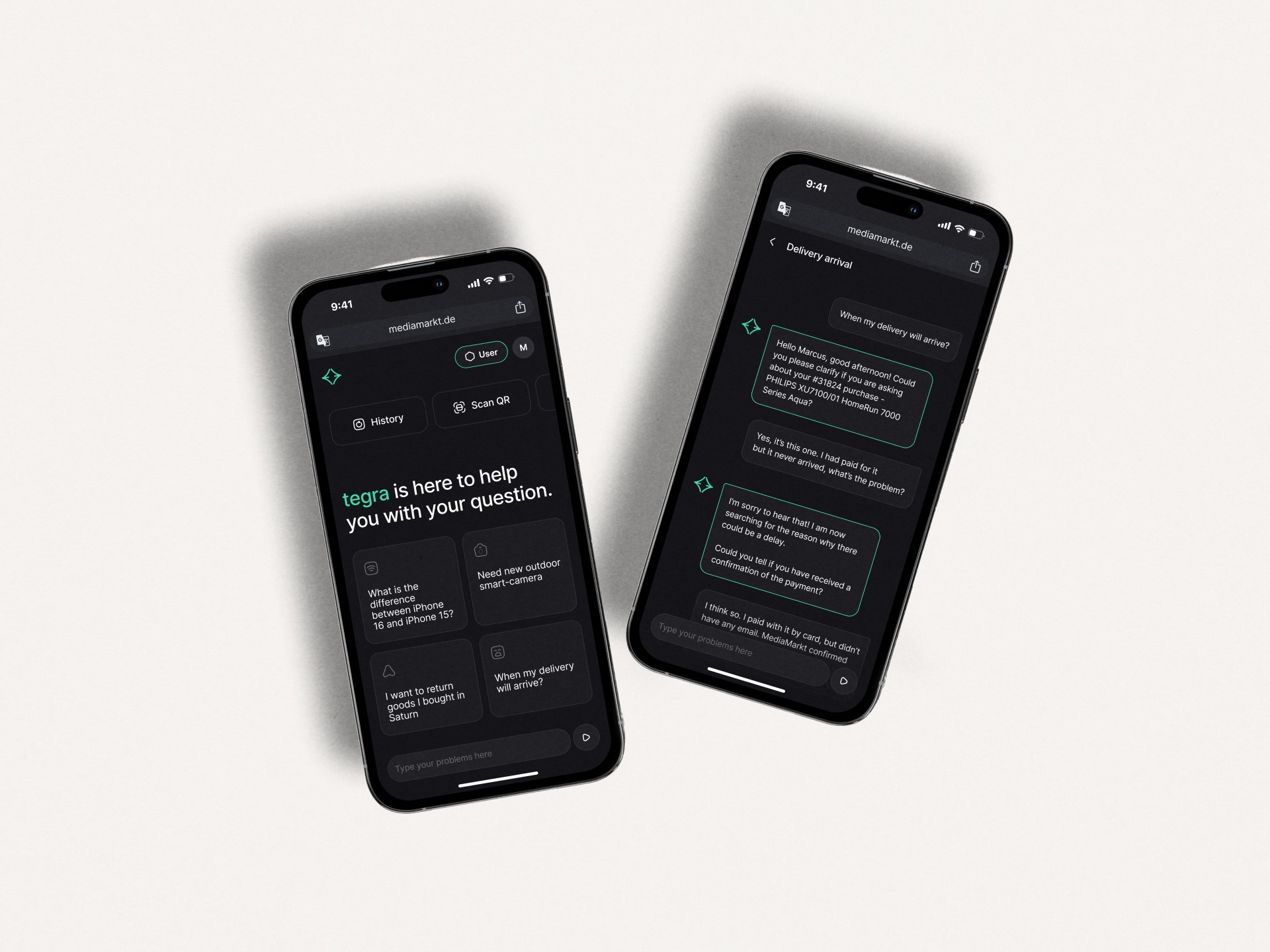
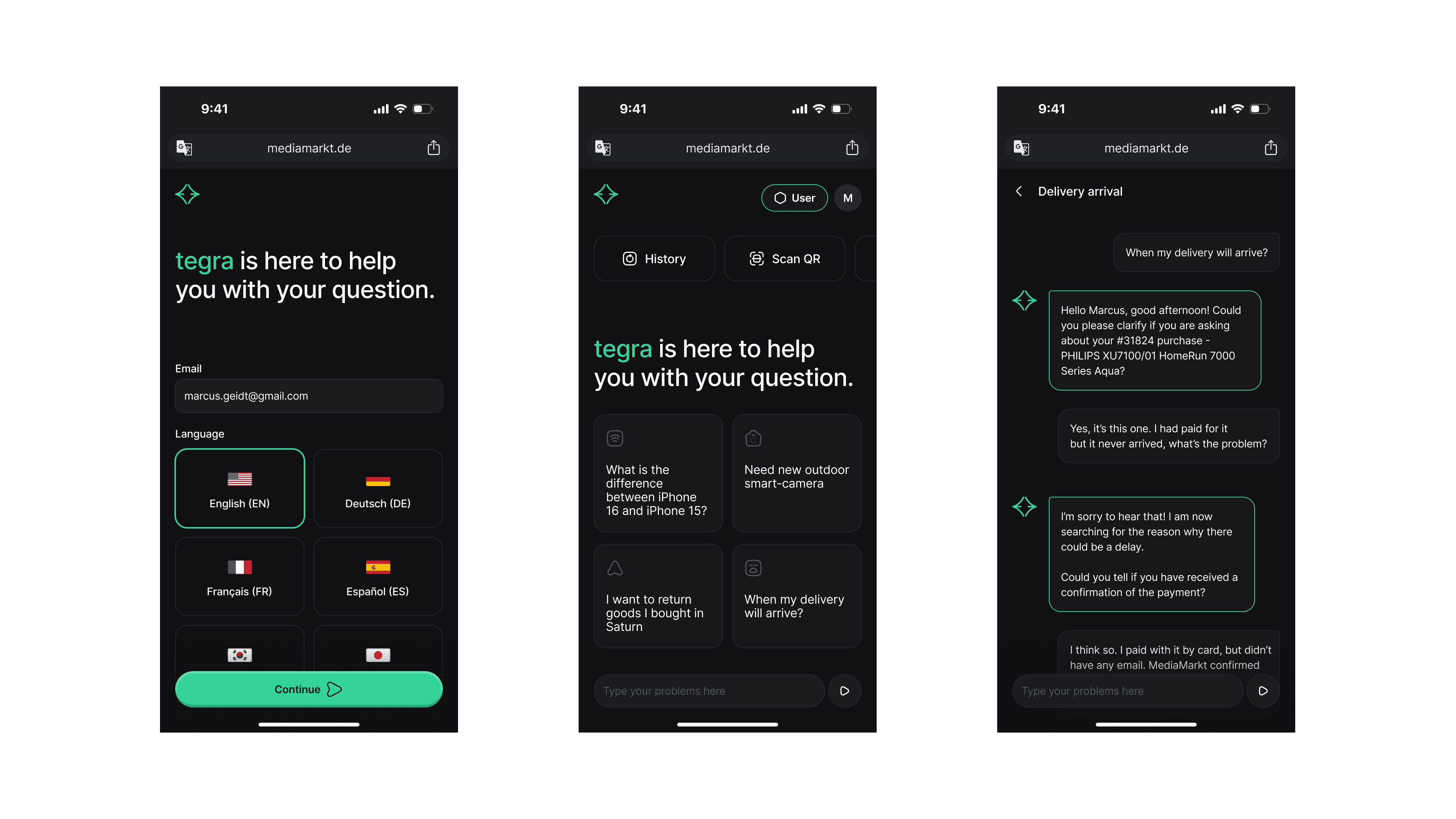
Tegra is a multilingual AI support assistant integrated with existing tools.
For customers:
Automated answers based on FAQs and documentation
Proactive replies to common follow-up questions
Clear escalation to a human agent
For agents:
Simple onboarding via document upload
Centralized conversation history and knowledge base
AI-suggested reply templates, editable by support leads
Dashboard to review, correct, and train the system
A clear “Switch to human” option ensures transparency and preserves trust.
Key features
Instant setup — upload documents, no tech team required
Integrated knowledge base — searchable conversations and templates
Smart templates — AI-suggested replies tailored to the German market
Human escalation — seamless handoff to agents
Results & validation
Outcome:
Prepared a pre-seed startup concept suitable for early investor conversations
Potential impact (projected, concept-level):
↓ Average support time by 40–50%
↓ Email backlog by ~60%
↑ Customer satisfaction
↑ Agent onboarding speed (2×)
↑ Agent productivity
What I learned
AI adoption depends more on trust than accuracy
Human oversight is a UX requirement, not a fallback
Reducing cognitive load can unlock automation acceptance
Good UX can make complex AI systems feel simple and safe